
 What to Know Before You Replace a Garage Door in Sandy
A guide to buying a replacement garage door in Sandy, UT, built around this area's 1980s-90s housing stock and cold, severe winter swings that stress doors and openers.
When the Power Goes Out, What Happens to Your Opener
Sandy homes built mostly 1969-2015 run openers that struggle when a winter power cut hits. Here's what to check before the next cold snap knocks yours out.
Local detail
The Situation
Most of the houses on this side of the valley went up between 1969 and 2015, with the bulk of that stock dating to the 1980s and 90s. That matters for openers because a house from that window usually has its original chain-drive unit, or a replacement installed decades later on the same wiring and the same wall switch. These units were never built with a battery backup in mind - that feature didn't show up as standard until much more recently. So when the power drops, which it does here during hard winter weather, the door just stops. No chime, no warning light, it's dead until the grid comes back or you pull the manual release.
We get calls every cold season from people who assumed their opener had backup power because the newer model next door does. It doesn't, unless someone's replaced it. The other common call: the opener comes back on after a power cut but the door won't respond to the remote, because the logic board lost its memory and needs reprogramming. Neither of these is a big repair. Both catch people off guard at the worst time, usually at 6am with a car trapped inside or outside.
The area
What to Check
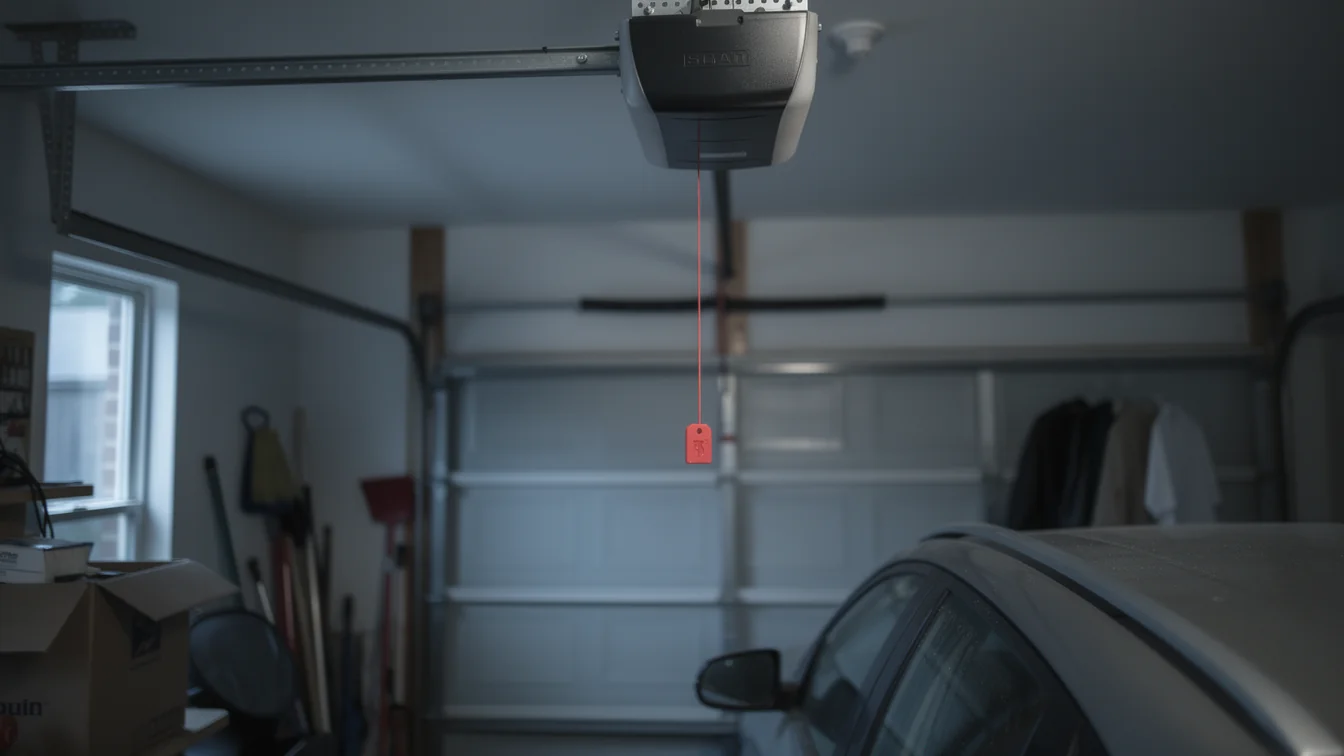
Find the manual release cord - the red handle hanging from the rail near the top of the door. Pull it once, with the door down, and see if it releases clean or binds. If it binds, that's a spring or track problem hiding behind an opener that otherwise looks fine.
Next, check the unit itself for a small label or sticker that says 'battery backup' or shows a battery compartment. If your house falls in that 1980s-90s band we mentioned, odds are good there isn't one. That's not a defect, it's just the age of the equipment.
After any outage, test the wall button first before the remote. If the wall button moves the door but the remote doesn't, that's a programming reset, not a broken opener - a five-minute fix, not a replacement.
Last, look at where your opener's circuit sits. If it shares a breaker with something else in an older panel, a cold-weather load spike elsewhere in the house can trip it even when utility power is fine. Worth ruling out before you assume the opener itself failed.
What we find
Where People Go Wrong
The biggest mistake is forcing the door up by hand without pulling the release first. On an opener from the original build era, the drive gear can strip under that kind of pressure, turning a free fix into a $150-200 part. Pull the cord, then lift.
Second mistake: assuming a dead opener means a dead spring, or the other way around. They fail independently. A house in this income bracket tends to have two cars and a door that gets used several times a day, which wears springs on its own schedule, unrelated to the opener's electronics.
Third: buying a battery backup unit online and wiring it in without checking that the existing opener model is even rated for it. Chain-drive units from the 80s and 90s often aren't, and forcing it can damage the board. If your opener is that old, a full swap to a newer unit with backup built in is usually the straighter path, not a retrofit.
We'll say the honest part here too: if your opener is original to a house built in the 1980s, repairing it piece by piece rarely pencils out once you're past a board or a gear. Replacement usually wins on cost per year of service.
How we work
What the Weather Here Does to It
This area sits in a cold, severe climate band, and that shows up in openers two ways. First, grease in the drive gear and the chain thickens in hard cold, which slows the carriage and trips the opener's force sensor - the door reverses partway up and you think the unit's failing when it's just cold grease. Second, cold snaps are exactly when the grid is under the most strain from heating load, which is when outages happen, which is when you discover whether your opener has backup power or not.
The practical order of operations: before the hard cold sets in, know where your manual release is, confirm whether you have battery backup, and if your opener dates back to the original build era, get it looked at rather than finding out mid-storm. None of this is exotic work. It's maintenance that matters more here than it would somewhere with a mild winter, because the cold and the power strain tend to arrive at the same time.
Questions
Common questions
Why did my opener stop responding after the power came back on?
Most openers lose their remote memory during a hard power cut and need to be reprogrammed - usually a button sequence on the unit itself. The wall switch typically still works because it's wired directly. If the wall switch doesn't move the door either, that's a different problem and worth a call.
Does my opener have a battery backup?
Check the unit for a battery compartment or a label mentioning backup power. Houses in the 1980s-90s stock common in this area usually have original or early-replacement openers without it, since the feature wasn't standard equipment back then.
Is it worth adding a battery backup to an older opener?
Depends on the model. Some chain-drive units from the original build era aren't rated to accept a backup retrofit safely. If yours is that old, a full opener swap often makes more sense than trying to add backup power to it.
Recommendation
You Might Also Like
More garage door guides for Sandy homeowners.
What to Know Before You Replace a Garage Door in Sandy
A guide to buying a replacement garage door in Sandy, UT, built around this area's 1980s-90s housing stock and cold, severe winter swings that stress doors and openers.
 Weather Seals and Draughts: What Sandy Homes Actually Deal With
How Sandy's 1980s-90s housing stock and cold winters wear down garage door seals, tracks, and openers - what to check before the draughts cost you.
 When a Spring Goes in Cold Weather Here in Sandy
A look at why garage door springs snap in Sandy's cold-severe climate, what to check first, and the mistakes homeowners with 1970s-2010s era doors make.
Ready when you are
Need a garage door sorted in Sandy?
Sandy Garage Door Pros repairs and installs garage doors, springs and openers in Sandy, UT and the surrounding area.