
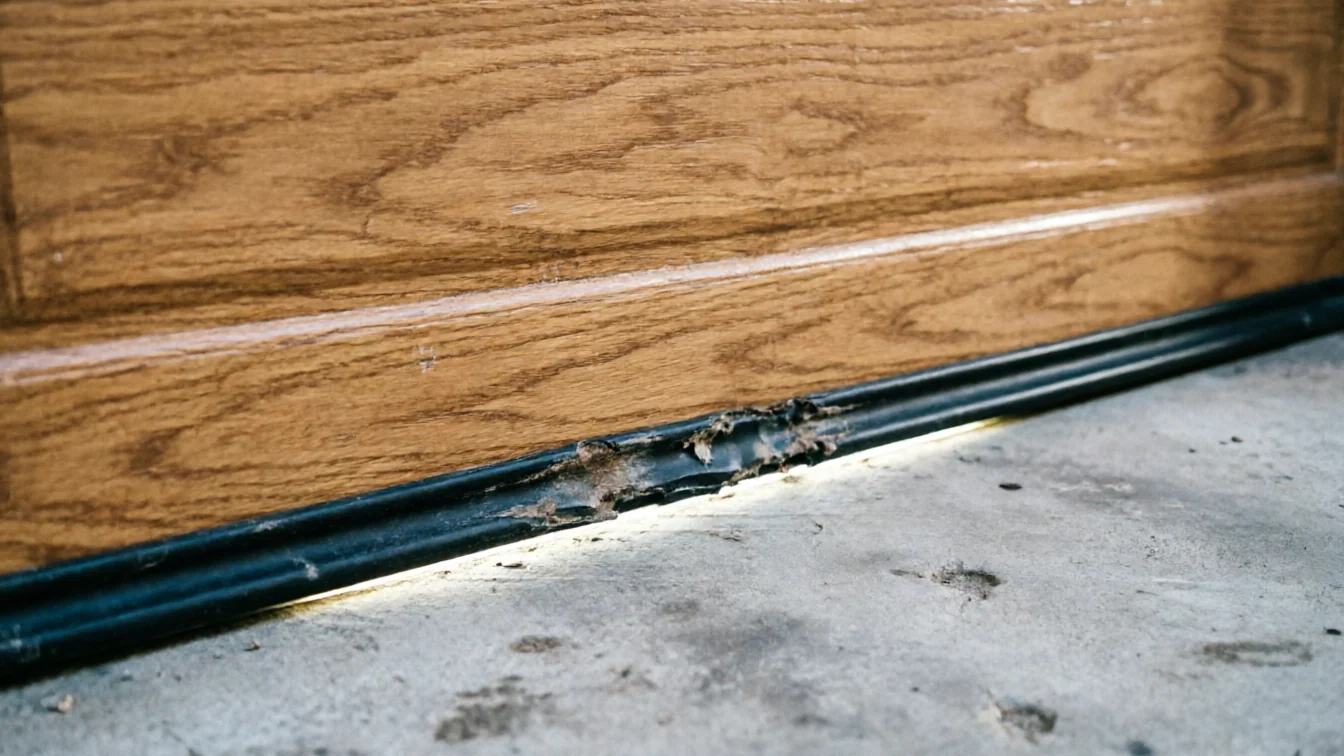
 Weather Seals and Draughts: What Sandy Homes Actually Deal With
How Sandy's 1980s-90s housing stock and cold winters wear down garage door seals, tracks, and openers - what to check before the draughts cost you.
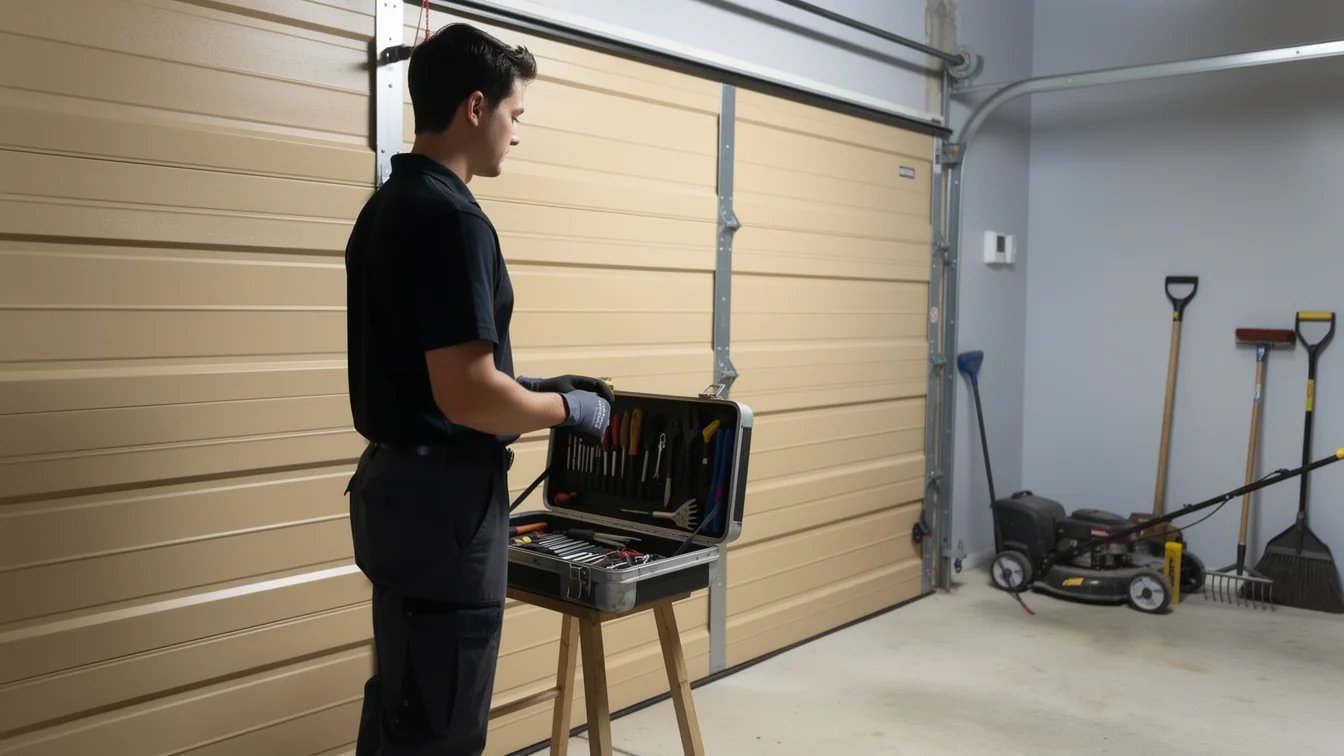
What a Service Call Actually Covers in Sandy
A look at what a garage door service call actually checks in Sandy, UT, where most homes date to the 1980s and 90s and winters hit hardware hard.
Local detail
The Situation
Most of the houses we get called to in Sandy went up between 1969 and 2015, with the bulk of the stock dating to the 1980s and 90s. That matters because a service call isn't one fixed checklist - what we do at a house built in 1986 is not what we do at a house built in 2008. Older doors in Sandy's established pockets still run original torsion springs and steel tracks that have seen three decades of mountain winters. Newer builds out toward the edges of the 29 areas we cover tend to have insulated steel doors and quieter belt-drive openers, but the hardware ages the same way regardless of the door on top of it. A service call starts with figuring out which era of house we're standing in front of, because that decides whether we're tightening and lubricating or telling you the spring is past its safe working life.
We don't open a call by assuming anything. We look at the panel, the track, the spring, and the opener separately, because in a city with this much age spread in the housing stock, any one of those four can be the actual problem while the others look fine.
The area
What to Check
On a standard call we check the torsion spring for rust and gap stretch, the lift cables for fraying, the rollers for flat spots or cracking, and the track for bends where a car clipped it. We check opener force settings, because a door that slams the last two inches onto concrete is usually an opener problem, not a spring problem, and setting it wrong is how people lose fingers.
We also check the bottom weather seal and the panel seams, which in Sandy's cold-winter climate band tend to crack or pull loose faster than in milder places. A seal that's split lets meltwater and cold air straight into the garage, which then works on everything else - cables rust faster, the opener's circuit board sees more moisture, and wood jambs swell.
One thing we're honest about: we don't do cosmetic touch-up on dented panels unless the dent is affecting the track alignment. If it's just a dent, that's a different job than a service call, and we'll say so instead of running the clock on it.
What we find
Where People Go Wrong
The most common mistake we see across the Sandy service area, including houses out toward Granite and Cottonwood Heights, is treating a noisy door as a lubrication problem when it's actually a spring reaching the end of its cycle count. Spraying oil on a spring that's about to go doesn't buy you safety, it just buys you a quieter failure.
The second mistake is DIY tension adjustment on torsion springs. These are loaded systems, and on the older 1980s and 90s stock common here, the winding cones are often rusted enough that they don't release evenly. We've been called out after someone tried to adjust spring tension themselves and the bar slipped.
The third is ignoring a slow-closing door. In a service area with median household income over six figures, most owners can afford to fix a problem early, but a lot of people wait until the door won't close at all. By then what would have been a cable replacement is often a cable plus roller plus track straightening, because a dragging door usually means something is already binding against something else.
How we work
What the Weather Here Does to It
Sandy sits in a cold, severe climate band, and that shows up in the hardware before it shows up anywhere else in the house. Steel springs and cables contract in cold temperatures, which changes their effective tension - a spring set correctly in August can feel heavy or uneven by January. Lubricant that's fine in summer gels up in deep cold and stops doing its job right when the door is working hardest against a stiff, cold track.
Moisture from snowmelt tracked in on tires and boots sits on concrete floors and wicks up into steel jambs and bottom brackets, which is where we see rust start on doors that otherwise look fine. On the older end of the housing stock, where the door and opener may be original to a house built in the 80s or 90s, that slow rust is usually what finally takes out a spring or a hinge, not any single storm.
We don't pretend one visit undoes thirty winters of that. A service call in cold weather is mostly about catching which part is closest to failing before it fails on its own schedule.
Questions
Common questions
How often should a garage door get serviced in Sandy?
We don't have a fixed interval that fits every house here, since the housing stock spans 1969 to 2015. As a rule, older torsion hardware from the 1980s and 90s needs more frequent checks than a door installed in the last decade, especially going into winter.
Does a service call include fixing a broken spring?
The call itself is diagnostic - we check spring, cables, rollers, track, and opener. If we find a spring near the end of its life or already broken, replacing it is a separate line item we'll quote on the spot, not something bundled silently into the visit.
Why does my door act differently in winter?
Cold temperatures change how steel springs and cables sit under tension, and cold grease thickens and slows the track. In Sandy's cold, severe climate band, that means a door that worked fine all summer can start binding or closing unevenly once temperatures drop.
Recommendation
You Might Also Like
More garage door guides for Sandy homeowners.
Weather Seals and Draughts: What Sandy Homes Actually Deal With
How Sandy's 1980s-90s housing stock and cold winters wear down garage door seals, tracks, and openers - what to check before the draughts cost you.
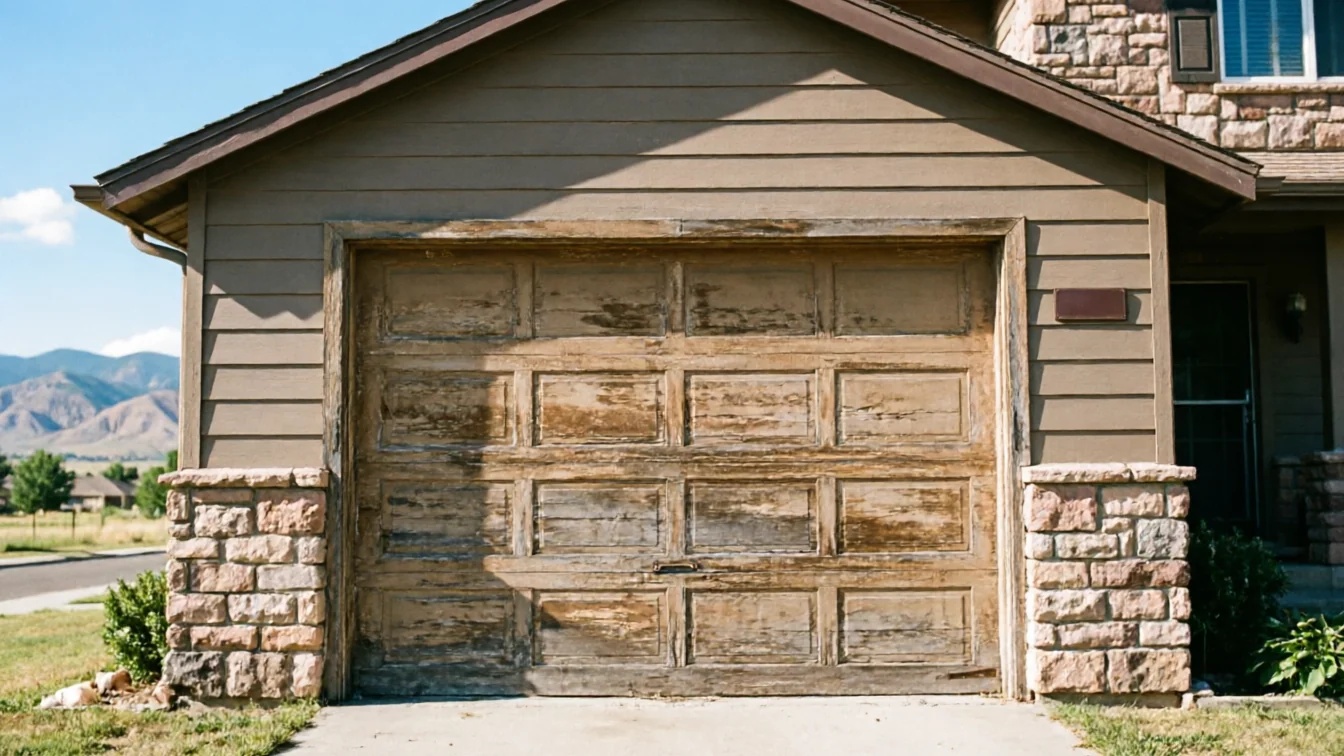 Deciding If Your Sandy Garage Door Is Worth Repairing
Sandy homes mostly date 1969-2015, with a thick band of 1980s-90s stock.
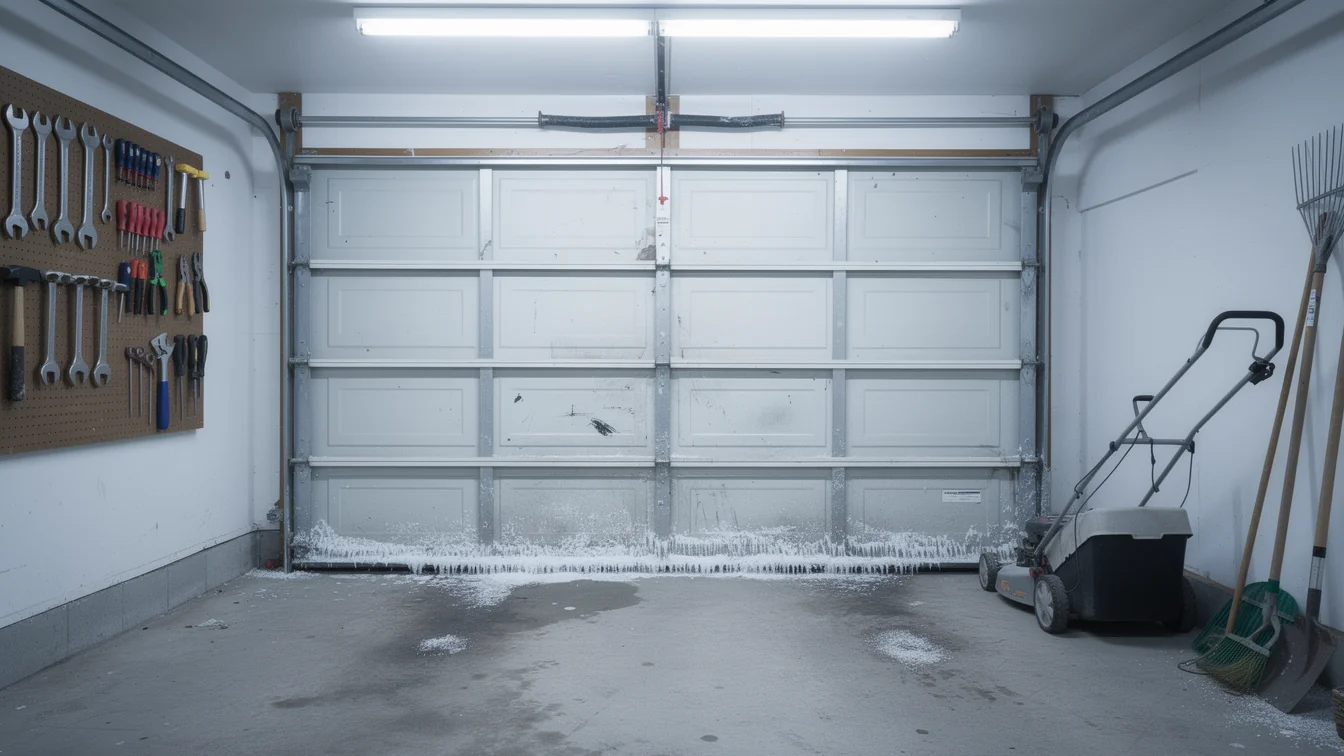 What Sandy's Housing Age Means for Your Garage Door
Sandy's housing stock runs 1969 to 2015 with a 1999 median, and the cold-severe climate here is hard on the uninsulated steel doors that era shipped with.
Ready when you are
Need a garage door sorted in Sandy?
Sandy Garage Door Pros repairs and installs garage doors, springs and openers in Sandy, UT and the surrounding area.